How to Become a Medical Supplies Distributor?

How to Become a Medical Supplies Distributor?

How to Become a Medical Supplies Distributor?

Doctors and other medical professionals rely on high-quality equipment to treat patients. This equipment ranges from gloves and masks (PPE) to intricate niche tools used by specific surgeons, doctors and health professionals. Hospitals and office managers work closely with medical supply businesses to procure this equipment and ensure they always have the items they need.

With market size expected to reach 160 Billion USD by 2025, and a CRGA growth rate of 7.2 percent, it’s an opportunity to consider. Set yourself up for success by getting to know the ins and outs of starting a medical supply business.

Choose a medical niche or underserved market

Operating a medical supply business is no different from any other broadcasting company in oman in that you need to find what makes your brand unique. Once you know that, you can find your target market and work to set yourself apart from competitors. Ask questions like these to better understand what you bring to the industry:

Are you an expert in a medical niche and know what certain specialists need?
Are you an ex-doctor or medical professional with real-life medical experience?
Is there an underserved market that needs a reliable source of medical supplies?
Do you have an idea for getting supplies to doctors faster or better, like a subscription service or convenient online portal?

Not only will answering these questions help you establish your business, but it will also guide your marketing and help you secure funding.
Determine your business type

Once you have a business idea, you will want to form your company. Decide whether you want to operate as a Limited Liability Corporation (LLC), C-Corporation, or S-Corporation. The type of business you choose will depend on your business structure and affect how you’re taxed, what fees you need to pay, whether or not you need to raise capital and more.

Work with a local accountant to help you decide what is best for your business and refer to the BizFilings business type comparison tool to get a better understanding of your options. Each state has its own guidelines and costs for forming a business, such as whether you need to produce annual reports or pay annual fees to stay operational. Knowing all of these details will help you choose the right business entity for your new medical supply venture.
Secure your operating licenses

In addition to registering your company, you need to secure business licenses and permits necessary for a medical supply business. Forming an LLC or C-Corp doesn’t necessarily mean you can legally operate, just that the state knows you exist—you must get your licenses or permits secured before beginning.

You can use the BizFilings’ Business License Wizard to identify which licenses would be relevant to your business and check with your local business regulations and requirements to ensure you have all the correct paperwork to begin operating. Note that fees will vary from state to state and may be based on annual revenue.
Fund your business

How to Become a Medical Supplies Distributor?

Important to any good business is accurate bookkeeping and a strong financial footing. You must have a clear understanding for how you plan to fund your medical supply company and how this funding will affect your budget now and in the future. A few funding options include:

Bootstrapping: This refers to relying solely on your own money.

Small business loan: To secure a loan, you’ll work with a financial lender to get financing.
Investors: With an investor, you’ll work with private entities to receive funds and then share part of your profits as your business grows.
Crowd-funding: Use a site like Kick-Starter to fund your business with donations from people around the world. This is a good option for companies with a socially-driven mission.

The viability of these medical supply financing options will vary depending on your business size and startup costs and, each option also has its own benefits and drawbacks. For example, you don’t have to share your profits or make interest payments by bootstrapping, but that may not be an option if you don’t have access to startup capital.
Identify vendors and distributors

The foundation of your business will be working closely with medical distributors and vendors. These are large-scale manufacturers who produce millions of supplies each year who then sell to distributors like yourself so you can market and sell the wares on a smaller scale. When choosing your supplier(s) and vendor(s), consider a few key factors:

Future innovation: Does your supplier have plans to grow and innovate in the coming years, ensuring that you stay relevant as a business as well?
Communication: How well are they at communicating with you? Are their terms and business details clear?
Expertise: How well do they know their market? How much can you benefit from their expertise?
Quality: Are they as committed to quality as you are?
Delivery systems: Will their delivery systems make it easier to run your business or are they complicated and difficult to manage?

Work with a medical supply mentor or expert to better understand the qualities of successful medical supply partners and determine which potential vendors and distributors would be best for your specific needs.
Build your business and market your brand.

Once you have established what your business is and how it operates, the only thing left to do is execute your business and marketing plan. During this period, you will open your warehouse, website or both, ensuring that you have a place to house the medical supplies and/or manage orders.

You also need to use this time to develop marketing materials and start reaching out to potential clients. Your industry may require different marketing methods, so be sure to do your market research first. This will help you dial in on who you want to target and how to best reach them.
Let us help you build a medical supply business

With the right planning, you can build a successful medical supply business. You don’t necessarily need a strong medical background to do this, just knowledge of what medical professionals need and a marketing plan to make them more effective at what they do.
Who is the biggest cosmetics group in the world?

Who is the biggest cosmetics group in the world?

The US is home to four of the ten biggest cosmetics companies  in the world, while Japan and France have two each. L’Oréal remains the world’s largest cosmetics company, followed by Unilever, and P&G. Cosmetics Technology and broadcasting company in oman lists the top ten cosmetics companies, based on revenues in 2023.
World’s biggest cosmetics companies: Top ten by revenueThe US is home to four of the ten biggest cosmetics companies in the world while Japan and France each have two. L’Oréal remains the world’s largest cosmetics company, followed by Unilever, and P&G. Cosmetics Technology lists the top ten cosmetics companies, based on revenues in 2023.
World’s biggest cosmetics companies: Top ten by revenue

1. L’Oréal

2. Unilever

3. P&G

4. Estée Lauder

5. Shiseido

6. Beiersdorf

7. LVMH

8. Kao

9. Coty

10. Johnson & Johnson
1. L’Oréal

Top ten cosmetics companies

1.L’Oréal

L’Oréal is the world’s largest cosmetics group. Image courtesy of Arthur Weidmann. French cosmetics company L’Oréal achieved €27.99bn ($33.93bn) in revenues from group sales in 2020, a 6.29% decline from €29.87m ($36.21m) in 2019. The company’s Consumer Products division contributed approximately 41.8% of the revenues while its L’Oréal Luxe division accounted for 36.33% of the sales. Approximately 22% of the revenue came from the Professional Products and Active Cosmetics businesses.

The sharp decline in profits was triggered by the supply chain disruptions due to the Covid-19 pandemic. The personal care giant was back on the growth track with a 4.8% like-for-like acceleration in sales in the fourth quarter of 2020. The widespread closure of points-of-sale was offset by L’Oréal’s strong performance in digital and e-commerce platforms, with the e-commerce business witnessing a 62% increase in sales and accounting for 26.6% of the entire sales in 2020.

L’Oréal is the world’s largest cosmetics group with a presence in 150 countries. The company creates and develops cosmetic products across skincare, haircare, make-up and perfumes. It has 36 brands in its portfolio, including L’Oréal Paris, Vichy, Garnier, Yves Saint Laurent Beauté, Giorgio Armani Beauty, Ralph Lauren, Maybelline New York, and Biotherm.

2. Unilever

World’s Top ten cosmetics companies
Unilever offers products across different categories, including beauty and personal care, household cleaning products, and toothpaste. Image courtesy of Unilever.

British multinational consumer goods company Unilever’s revenues fell 2.4% year-on-year to €50.7bn ($60.99bn) in 2020. The company’s Beauty & Personal Care segment registered the highest revenues among its various business units. The segment reported €21.1bn ($25.38bn) in revenue, which is approximately 41.61% of the total turnover. Approximately 20.71% of Unilever’s turnover came from the Home Care division, while the Foods & Refreshment business contributed the remaining 37.67%.

Strict lockdowns in India and China impacted the market environment in the first half of 2020, however, the relaxation of Covid-19 lockdowns and restrictions in the two countries lead the company to return to the growth path. The company is experiencing rising demand for the consumption of food products at home in the wake of the pandemic while the sale of beauty and personal care products, except hygiene products, was affected by the reduced focus on personal grooming.

With an operational footprint in more than 190 countries, Unilever supplies products such as food, confections, soft drinks, tea, ice cream, energy drinks, coffee, laundry and household cleaning products, beauty and personal care, toothpaste, and healthcare products.

Who is the biggest cosmetics group in the world?

3. P&G

Top ten cosmetics firms
P&G’s Olay brand has an approximately 6% share of the global skincare market. Image courtesy of Olay Body.

Procter & Gamble (P&G) saw a 4.8% increase in net sales from $67.68bn in 2019 to $70.95bn in 2020, mainly driven by a 10% rise in net sales of its Health Care business. Combined revenues from Beauty and Grooming segments stood at $19.41bn, a 1.72% year-on-year increase. The Beauty segment’s net sales rose 4% year-on-year to $13.35bn, while earnings from sales of Grooming segment products fell by 2% to $6.06bn. The Beauty and Grooming segments together contributed to 28% of the company’s net sales in 2020.

The North America region was the biggest market accounting for 47% of the revenue, followed by Europe (22%), Asia Pacific (10%), Greater China (9%), Latin America (6%), and India, Middle East, and Africa (IMEA, 6%).

Procter & Gamble operates through Fabric & Home Care, Beauty, Health Care, Grooming, as well as Baby, Feminine & Family Care segments. Major brands of the company include Head & Shoulders, Ariel, Old Spice, Pantene, Safeguard, Olay, Tide, Vicks, and Gain.

4. Estée Lauder

Estée Lauder’s skincare category grew by 12.68%, while the Makeup category fell by 18%. Image courtesy of The Estée Lauder Companies Inc.

Temporary retail store closures due to the coronavirus pandemic triggered a 4% year-on-year fall in Estée Lauder’s net sales to $14.29bn. It was partially offset by an increase in sales through online channels. The company’s revenues were also boosted by net sales of perfumes and cosmetics maker Have&Be, which was acquired by Estée Lauder in December 2019. The company implemented digital strategies to enhance sales by tapping online customer demand during the second half of 2020.

Estée Lauder’s skincare products category showed resilience, recording a 12.68% growth to achieve net sales of $7.38bn while its makeup, haircare, and fragrance categories declined 18%, 12%, and 13%, respectively. Estée Lauder’s earnings in the Americas and Europe, the Middle East & Africa decreased year-on-year by 20% and 3%, respectively. The Asia Pacific region, however, saw a 15% increase in net sales, with a particularly strong performance in Mainland China.

The company announced 1,500 to 2,000 job cuts or approximately 3% of its global workforce, affecting point of sale workers and associated support staff. It also decided to close approximately 10% to 15% of its freestanding stores across the world.

Estée Lauder’s portfolio includes more than 25 brands that are available in 150 countries. The beauty products firm has more than 48,000 employees worldwide.

5. Shiseido

Shiseido’s net sales fell by 18.6% year-on-year in 2020. Image courtesy of Wpcpey. One of the oldest cosmetics companies in the world, Japanese multinational personal care company Shiseido witnessed an 18.6% year-on-year fall in net sales to JPY920.88bn ($8.73bn). Its Japan Business segment accounted for 32.9% of the total sales while the China Business contributed 25.9%, with the remaining revenues coming from Americas (9.9%), EMEA (10.3%), Travel Retail (10.7%), Asia Pacific (6.4%), Professional (1.4%) and Other (2.8%) business.

The company is investing in the premium skin beauty category and digital platforms to enhance growth. Its net sales are projected to increase by 19% JPY1.1tn ($10.43bn) in 2021, primarily driven by a 33% growth in China and 27% growth in the Americas.

Shiseido has five brand categories, namely Prestige, Cosmetics, Personal Care, Fragrance, and Professional. It announced a plan in February 2021 to transfer its Personal Care business to a newly formed company from 1 July 2021.

6. Beiersdorf

biggest cosmetics companies
Nivea’s net sales stood at $4.79bn in 2020. Image courtesy of Federica Piersimoni.

German multinational personal care products company Beiersdorf reported €5.7bn ($6.91bn) in revenue in 2020, a 9.1% decline compared with 2019.

The sales performance was mainly affected by the Covid-19 pandemic. The company, however, increased its market share in emerging markets and recorded higher sales growth in Brazil. The company’s main brand Nivea recorded a 10.8% drop in sales to €3.95bn ($4.79bn) while sales of the Derma business unit grew by 5.2%, driven by strong double-digit sales growth in South America and the US.

Beiersdorf owns several brands such as Nivea, La Prairie, Eucerin, Labello, Hidrofugal, Gammon, Coppertone, Chaul, and Maestro in the consumer business segment. Its other business segment, tesa, is involved in self-adhesive systems and solutions.

Who is the biggest cosmetics group in the world?

7. LVMH

World’s biggest cosmetics companies
LVMH’s new Bvlgari Allegra fragrance collection was launched in January 2021. Image courtesy of Bvlgari.

LVMH, a luxury goods company based in France, reported €44.65bn ($54.26bn) in revenue, a 17% year-on-year decrease from €53.67bn ($65.23bn) in 2019. Its Perfumes & Cosmetics business accounted for 11.7% of the total sales revenues. Revenues from Perfumes & Cosmetics witnessed a 23% decline to €5.24bn ($6.36bn) while Watches & Jewelry, Selective Retailing, Fashion & Leather Goods, and Wines & Spirits fell by 24%, 31%, 5%, and 15% year-on-year, respectively.

The Perfumes & Cosmetics brands, however, returned to a growth trajectory in the second half of 2020, driven by demand for skincare and a surge in online sales, especially in Asia. LVMH’s Christian Dior brand recorded improved performance in the second half, due to the success of Miss Dior Roses N’Roses and J’adore Infinissime perfumes, as well as Rouge Dior make-up.

One of the world’s largest luxury goods conglomerates, LVMH owns multiple brands, including Louis Vuitton, Givenchy, Tag Heuer, Bvlgari, Tiffany & Co., Acqua Di Parma, Marc Jacobs Beauty, and Louis Vuitton.

8. Kao

Top ten cosmetics companies in the world
Kao launched a new serum, named SOFINA iP Interlink Serum Pore-Refining Moisture to condition skin in February 2021. Image courtesy of Kao Corporation.

Japanese chemical and cosmetics company Kao’s sales revenues decreased by 8% to JPY1.38tn ($13.14bn). Its Cosmetics and Skin Care & Hair Care businesses recorded a combined revenue of JPY543bn ($5.17bn).

The Cosmetics division fell by 22.4% year-on-year, mainly affected by reduced demand and temporary store closures. The Skin Care & Hair Care business declined by 9.3%, although the demand for hand soaps, sanitisers, and other hygiene products increased.

The company expects to achieve a 3.5% increase in revenues in 2021 over the previous year. Its operating income is projected to increase by 0.8% to JPY177bn ($1.68bn).

Kao operates through two business segments, namely consumer products and chemicals. Divisions in consumer products include Cosmetics, Human Health Care, Skin Care & Hair Care, and Fabric and Home Care.

9. Coty

Top ten cosmetics companies in the world
Coty renewed its fragrance licence partnership with Lacoste in July 2019. Image courtesy of Coty Inc.

Cosmetic, skin, body care, fragrance and hair brands company Coty achieved $4.71bn in net revenues, a 25% year-on-year decrease. It reported 38% of the revenues from the Americas, 49% from EMEA, and 12% from the Asia Pacific.

The company’s Consumer Beauty business, which fell by 29% year-on-year, contributed 44.79% of the total revenues. The Luxury business recorded $2.6bn, a 21% decline year-on-year, and accounted for 55.2% of the total revenue.

Headquartered in New York, US, Coty offers consumers brands such as CoverGirl, Adidas body care, Max Factor, Nautica, and Rimmel. The company has licensing agreements with luxury brands such as Hugo Boss, Burberry, Chloé, Calvin Klein, Gucci and Davidoff. Its products are available in more than 150 countries.

10. Johnson & Johnson

Johnson & Johnson offers pharmaceutical and consumer health products, as well as medical devices.

Johnson & Johnson’s net sales remained nearly flat at $82.58bn in 2020. The company’s Skin Health/Beauty segment in the Consumer Health business earned $4.45bn, of which 52.8% was contributed by the US market alone while the remaining revenues came from the rest of the world. The segment saw a 3.1% year-on-year decline over 2019. Approximately 55.18% of the revenues came from the Pharmaceutical division while Consumer Health and Medical Devices divisions accounted for 17.01% and 27.79%, respectively.

Founded in 1886, Johnson & Johnson is a multinational company with more than 130,000 employees. Its skincare brands include Neutrogena, Aveeno, NeoStrata, Dabao, and Dr.Ci:Labo; and haircare brands include Maui Moisture and OGX.

What Is a Cosmetics Distributor?

What Is a Cosmetics Distributor?

What Is a Cosmetics Distributor?

In its most basic sense, a cosmetics distributor is a person or company who organizes the delivery of cosmetics products from the manufacturer to the consumer. The biggest distribution companies interface with department stores and retail outlets to deliver merchandise from major manufacturers. Cosmetics sales also can form the basis of small businesses or home-based businesses. Sometimes, the phrase “cosmetics distributor” refers to a single person who sells and distributes cosmetics on a person-by-person basis.

In business, a distributor generally is an entity that is charged with delivering a product from its point of manufacture to its point of sale. In most cases, a cosmetics distributor is a company that works as something of a go-between for major makeup brands and stores. They usually are independent, meaning that they work as free agents and do not have loyalties with either party. Rather, they operate on a contract basis, providing an essential service and often little more.

Professional distributors usually manage shipping and process inventory databases to anticipate when stores are running low on certain products. People in this branch of the cosmetics industry usually work with stores to coordinate delivery, and they often help with unpacking and sorting merchandise on arrival. In some cases, distributors also are responsible for collecting unsold or discontinued merchandise for return to the manufacturer, although this largely depends on the terms of the contract.

A commercial cosmetics distributor company in oman is an essential part of all store-based cosmetics sales. Distributors are indiscriminate and exist for designer cosmetics as well as cheap cosmetics. Most of the time, they perform jobs for only one line at a time, but they usually are able to handle multiple clients at once.

Cosmetics distribution also is popular on a home-business level. This sort of work is completely different from large-scale corporate distribution. It centers on individual distributors whose job is selling cosmetics and makeup products to people in their communities and social circles.

What Is a Cosmetics Distributor?

To become a cosmetics distributor in this sense, a person usually must sign on as an independent vendor with the parent cosmetics line. Some companies call these professionals distributors, and others call them consultants, direct sales representatives or something similar. Regardless of the title, their function is small-scale distribution.

Most of the time, these distributors must personally purchase many types of cosmetics from the parent company. Then, they must sell these products, usually for a profit, and replace their stock with new purchases when needed. Most of the time, the distributor focuses on only a few types of makeup and related products to increase the likelihood of unloading all pre-purchased items. Cosmetics distributor positions in this category are often billed as very lucrative cosmetics jobs, but a lot depends on the salesperson’s personality, the interest and budget of the buyers and the general market saturation.

Where to get business opportunities as a distributor?

To have more options or opportunities to become a distributor of a certain product or company, specifically in the cosmetics industry, it is important to know where to go at the most precise moments in order to seek partnerships with other distributors to expand with each other and achieve much more profit.

Therefore, here we specify the main keys to find business opportunities as a distributor:

  • Through medium-sized companies that facilitate the distribution of cosmetic articles. Together with them, you can acquire more possibilities to sell because they are workplaces that need to rely on a network because they do not have the capacity to set up a structure in each country.
  • At trade fairs and conventions, since these sites allow you to find interesting concepts in terms of distribution to generate profits.
  • By tracking industry innovation in other countries, this is a solution that not only allows you to become a distributor, but also helps you to innovate in your area and capture the attention of your target audience.

How to contact the company chosen to be a cosmetics distributor?

Another essential step to become the distributor of a brand is to contact the company directly. If you bet on it, the chances of occupying this position will be greater.

Therefore, if you have the opportunity to participate in a fair with the company you want to exhibit the product, choose to talk directly with their representatives. This can be done from the sales area and once you find the interlocutor, just show your interest in their articles and exhibit your skills as a distributor so that they pay attention to you.

But, in case it is a company that you got after researching the cosmetics market, the best thing to do is to get as much information as possible and seek contact via phone or email with the sales department. This is not difficult as long as the companies are focused on selling and expanding their business.

Now, when presenting your business plan, in any case, it is best that you choose to prepare it beforehand. That is to say, you must present the entire distribution project that you can entrust and carry out to ensure good profits to the company and even you at the same time. You can do this by means of an exhaustive market study together with realistic sales estimates that show the potential of the Spanish market and based on this, show the best distribution option.

The key points of the contract to become a distributor of a cosmetics company 

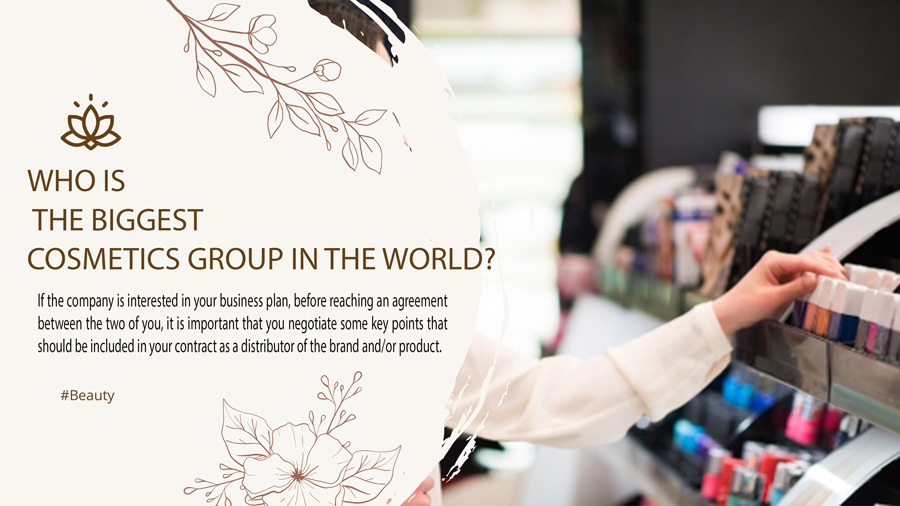
If the company is interested in your business plan, before reaching an agreement between the two of you, it is important that you negotiate some key points that should be included in your contract as a distributor of the brand and/or product. These elements are:

  • Exclusivity: With your proposal as a distributor, ideally you want to be the only one of the company for the Spanish territory. Emphasizing that, if you achieve this exclusivity, you can rely on other distributors at your command to get more profits and thus, make more sales in order to exceed the expectations of the company.
  • The type of commercial relationship: Keep in mind that being a commercial representative is not the same as being a distributor. In the first case, you will simply work on commission and you have to follow the commercial policy of the company of origin. Whereas, being a distributor means buying the company’s products and having total freedom on how you run your business (depending on the rules specified with the supplier).
  • Sales targets: In order not to disappoint the company or brand in question, you have to negotiate the lowest possible sales target. This way, you won’t run the risk of them underestimating your professionalism and instead, you’ll have a better chance of surprising the brand positively.
  • Pricing: Another of the most vital elements in order to be a good cosmetics distributor is to agree on a price with the company that will help you make money or, in other words, ensure optimal profit margins. In this case, it is essential to study your business plan perfectly to fight for the most competitive prices you want to get.
  • Marketing and sales costs: By nature, any commercial or marketing action you take to promote the brand’s products will benefit the brand in the short, medium or long term. In fact, we recommend you to make sure that the company participates in the commercial effort so that both are successful.

Once you have agreed on all the points outlined above, you can build a contract that promises to be mutually beneficial to both parties. Taking into account that, in addition to these key elements, it is appropriate to add some useful clauses that are favorable and beneficial. This is best done in conjunction with a specialist lawyer.

Among these favourable and important elements, we highlight the following:

  • The financial conditions: This refers to the payment terms which, above all, must be flexible.
  • The duration of the agreement: As with any agreement, an end date must be specified and when choosing one, it is best to opt for a permanent agreement. If this is not possible, the best thing to do is to renew it before it expires.
  • Exit conditions: Breaching certain conditions allows either party to terminate the agreement. Therefore, it is good to try to introduce some condition to be able to break the agreement, in case of any unfavorable situation.
  • The after-sales procedure: Don’t forget to detail important agreements about this procedure, especially when the products are defective from the factory.

What Is a Cosmetics Distributor?

The challenge starts after becoming a distributor of a brand.

Once you have managed to apply and designate yourself as the distributor of a brand or company, is when the real challenge begins to fulfill your business plan, meet the expectations of the company and show your professionalism, efficiency and exclusivity. For this reason, it is appropriate to perform the following actions after becoming a distributor:

  • Optimal communication strategies: You need to create a quality communication policy, depending on the cosmetics you are going to distribute. Either with classic advertising (on radio, television or press) or through a strategy based on opinion leaders, influencers and/or social networks.
  • Establish good procedures and practices in relation to the company: After signing the contract with the company, it is important to define efficient procedures and practices to operate in an agile and effective way in order to show the best distributor skills to the brand.
  • Go through trial and error processes until you find the key: As in any process, it is common that there are difficulties or frictions on both sides. But, this will allow you to experience trial and error processes with which it will be easier to refine your commercial actions to achieve good results and at the same time, improve the relationship with the company.

Real success story: 500Cosmetics

The Spanish company created in 2004, today, is a leader in the manufacture and distribution of high quality cosmetic products. Which, over the years, has been characterized by providing various solutions in order to meet the needs of its customers in terms of health, beauty and wellness. In addition to this, it is recognized for its strength and experience in the field of beauty both in Spain and worldwide.

Now, its main philosophy is based on offering efficiency and innovation in terms of aesthetics and health, adapting to the requirements of its customers at all times. Taking into account that, besides being a high quality online store, it has also focused on providing good prices to serve as one of the best distributors of cosmetic products in Spain.

It should be noted that, to increase its popularity, the company has opted to sell natural cosmetic products that, apart from benefiting the skin and hair care, also act sustainably to protect the environment and generate a positive impact on the planet. This was one of its most innovative ideas to capture the attention of a wider audience and to expand.

As if that were not enough, through its dropshipping mode with which it helps many entrepreneurs to start their cosmetics business, it has also managed to ponder itself as an optimal choice when it comes to suppliers of such items. Taking into account that it guarantees benefits based on minimizing the initial investment and expenses, to acquire profits much more easily. Above all, for its constant discounts and delivery times quite effective.

Brief summary to become the best distributor of a product…

  • Analyze the market to locate the most recognized and quality cosmetic brands.
  • Specify how you can establish direct contact with the brand or company that catches your attention to create an alliance.
  • Prepare a compelling business plan that captures the company’s attention and ensures real efficiency.
  • Define good distribution conditions that allow you to work with total freedom to ensure optimal results.
  • Negotiate exclusivity with the brand and company, for many more opportunities to produce jobs and earn money.
  • Seek professional help from an attorney to build a contract concerning your goals and objectives.
  • Take care of the relationship with the supplier at all times to acquire positive results, guarantee professionalism and benefit from an excellent partnership.